‘Horizontal revolt’: Why Albania’s young protesters want PM Rama to go
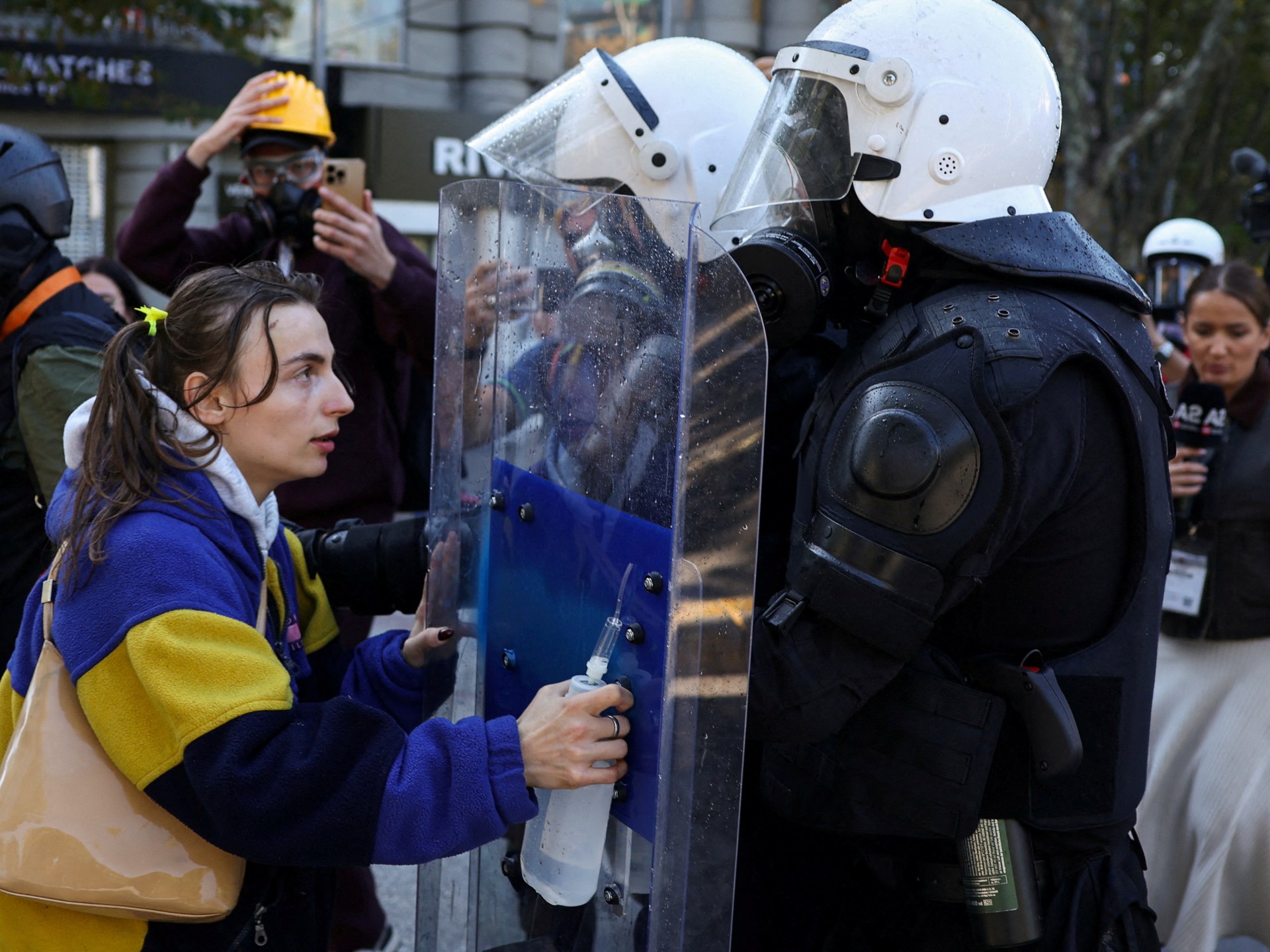
From the ‘Flamingo Revolution’ to street clashes in Tirana, an inside look at a leaderless youth uprising challenging Edi Rama’s decade-long rule. Save Share For several days, the streets of Tirana have witnessed a wave of antigovernment demonstrations, with demonstrators engaged in fierce clashes with security forces, while police have fired tear gas on thousands of young protesters to prevent them from scaling barricades. Protests escalated last week after school and university students joined them, citing rising tuition fees and crumbling infrastructure. What initially began as a targeted environmental protest in May has rapidly escalated into one of the most serious political challenges facing Prime Minister Edi Rama in his more than a decade in power. Yet, as the unrest reaches a boiling point, a fundamental question remains: Who is behind this movement, and can it force systemic political change? Contrary to claims by government officials that the unrest is being orchestrated by political opponents or external actors, analysts and journalists on the ground emphasise that the movement is largely decentralised and youth-driven. Fatos Hakorja, editor-in-chief of TV Klan and Klan News, told Al Jazeera that the demonstrations have evolved organically into a broad coalition of high school students, university students, environmentalists, and aggrieved citizens. “So far, what can be said with certainty is that the protests have been organised mainly by young people themselves,” Hakorja told Al Jazeera. “What began as the ‘Flamingo Revolution’ gradually developed into a broader student and youth protest… There is no clear evidence that a single consolidated structure stands behind the protests,” he said, referring to the May protest against a luxury resort that threatens the protected coastline. Hakorja noted that coordination takes place dynamically across digital platforms such as WhatsApp, Telegram, and Snapchat, rather than through formal organisational hierarchies. Albanian political analyst and publicist Ben Andoni echoed this view, describing the situation not merely as a standard protest, but as “a genuine, horizontal revolt”. “The protest has turned into a rebellion for the past seven days. It was a protest before, but it has never taken on the character of a movement. If it were so, there would be a leadership group and some short-, medium-, and long-term goals,” Andoni told Al Jazeera....