Why Iran-US negotiations keep failing
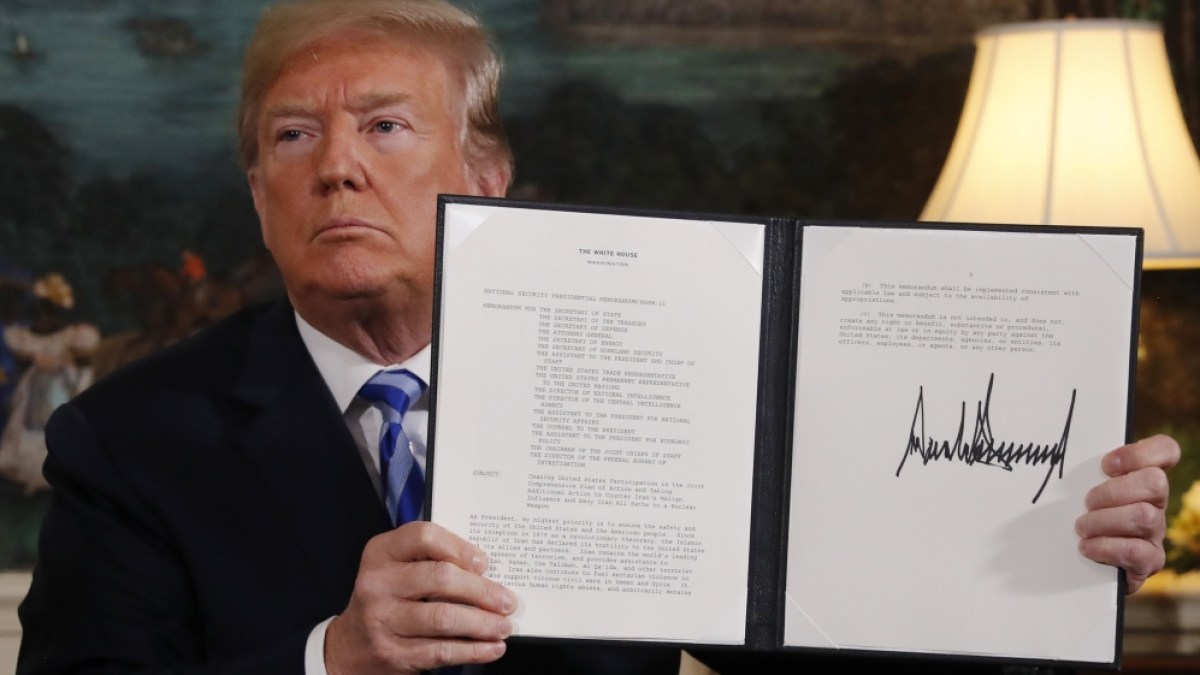
Relations between the two countries are dominated by policy complexes shaped by a history of hostility. Academic and senior political analyst specializing in Iran and Middle East Politics. Save Share Since the start of the war, there have been several negotiation initiatives between the United States and Iran. Only one – the memorandum of understanding signed in Islamabad on June 18 – was concluded, but it collapsed within days. While prevailing analyses tend to explain this failure through the details of the provisions, this article proceeds from a different premise: that the diplomatic stalemate between the two sides is shaped by a syndrome that has governed US-Iranian relations for years. In international relations, psychological syndromes can arise as a result of deep crises that leave their mark on political consciousness and memory, potentially obstructing efforts at rapprochement and negotiation between countries. In the case of Iran and the US, the syndrome is comprised of two complexes: the complex Washington developed as a result of the 1979 siege of the US embassy in Tehran and the complex Tehran developed as a result of historical US hostility and its withdrawal from the Iran nuclear deal in 2018. The roots of the rupture between the two countries go as far back as August 1953 when US and British intelligence agencies helped overthrow the nationalist government of Mohammad Mosaddegh after it nationalised the oil industry in 1951. Since then, a perception has become entrenched in Iranian consciousness: that Washington does not accept an independent government in Tehran and it is prepared to sabotage it if it goes against its interests. From this perspective, Washington’s decision to host Shah Reza Pahlavi, who had just been overthrown by his people, for medical treatment in October 1979 was read in revolutionary Tehran as a prelude to a second coup. Iranian students stormed the US embassy on November 4 that year and held 52 Americans for 444 days. Diplomatic relations between the two countries were severed and have not been restored to this day. While the incident is portrayed in the Iranian narrative as a defence of the revolution, in American consciousness, it established the image of Iran as a state that does not respect international norms, whose word cannot be relied upon and whose behaviour should not be rewarded. That is the embassy siege complex....