Senegal-sized Antarctic glacier melting faster than thought: Why it matters
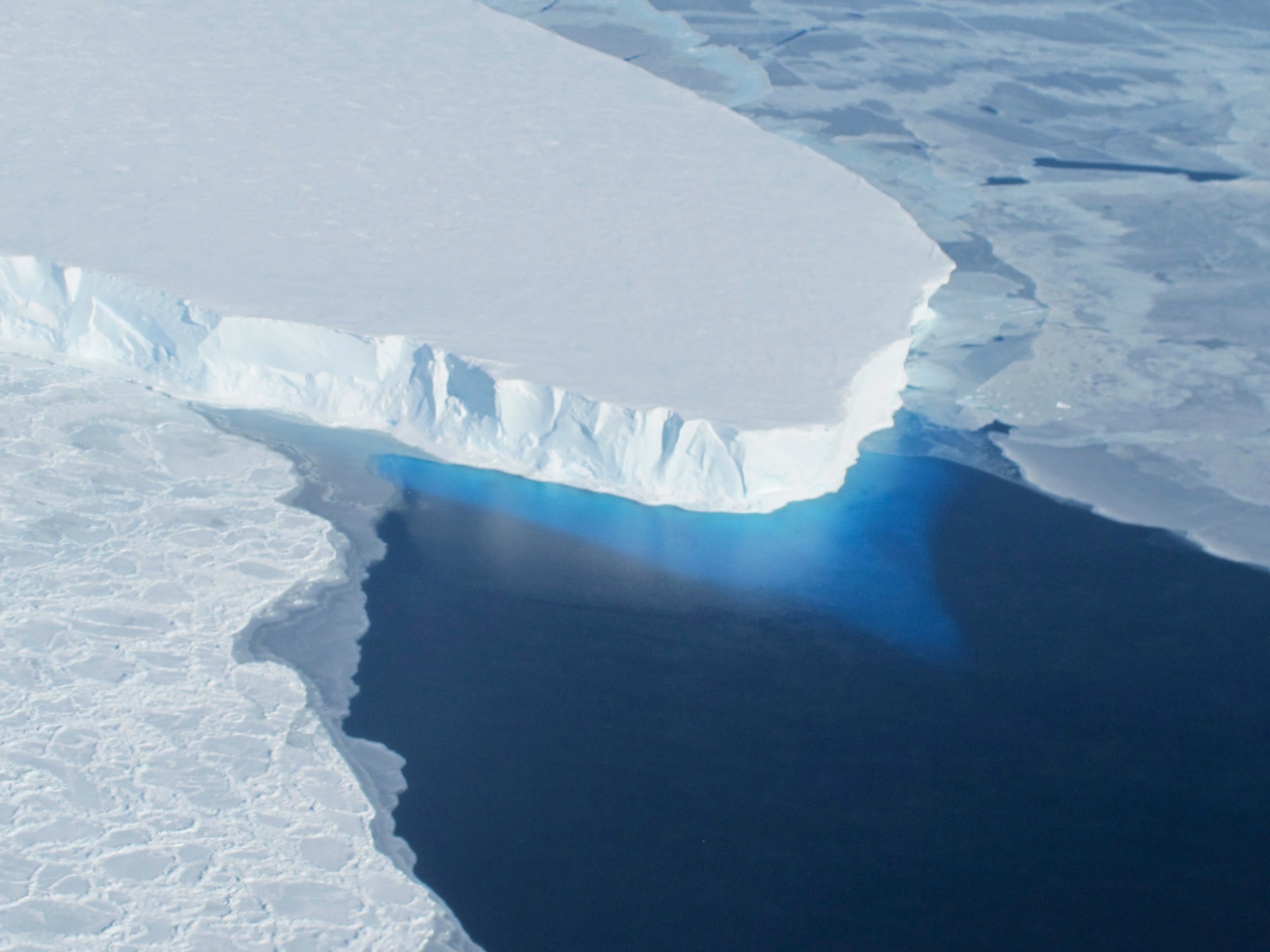
Thwaites glacier has been losing ice for decades. Now there are concerns of rapidly accelerating loss. Save Share The world’s largest glacier is melting much faster and could add twice as much to global sea levels as previously expected over the next century. New research published this week by a team of glaciologists has found that the Thwaites glacier in West Antarctica is losing mass rapidly because warm seawater is pushing underneath it and melting its core. This could add 1.2 inches (30mm) to water levels even if global warming does not accelerate as predicted. The findings, published in the journalNature Communications,add to a growing body of evidence that shows that the glacier, which has been receding for decades, is now losing mass even faster than scientists thought. Researchers at the University of California in the United States collaborated with NASA’s Jet Propulsion Laboratory for the study. Here’s what we know about the findings: Nicknamed the “Doomsday Glacier”, Thwaites is the largest glacier on Earth, spanning an area of around 192,000sq km (74,130sq miles) or roughly the size of Senegal – and larger than the US state of Florida. It is located on the Walgreen Coast of Marie Byrd Land in remote western Antarctica and forms part of the great West Antarctic ice sheet, which includes other glaciers and is 14 times the size of Thwaites. The glacier was first mapped in 1947 and is named after the late American glaciologist Fredrik T Thwaites, although he never visited it. In the 1980s, scientists discovered that Thwaites is melting rapidly and have closely monitored its melting process as concerns have grown ever since. Because it is so big, the glacier’s collapse would sharply raise global sea levels by a catastrophic amount – although researchers don’t project that will happen for many decades, or even a few centuries. Together, Thwaites and other glaciers such as the Pine Island glacier – an ice stream in West Antarctica which flows into Pine Island Bay in the Amundsen Sea – act as a barrier that holds back the vast and vulnerable West Antarctic ice sheet. If melted, the ice sheet could cause many coastal cities to be submerged around the world. At present, ice loss from Thwaites contributes around four percent of all global sea-level rise. Studies have calculated that the glacier has lost more than 1,000 billion tonnes of ice since 2000, and continues to lose 50 billion tonnes of ice per year....