What is the ‘Mother of All Bombs’ US could use in Iran?
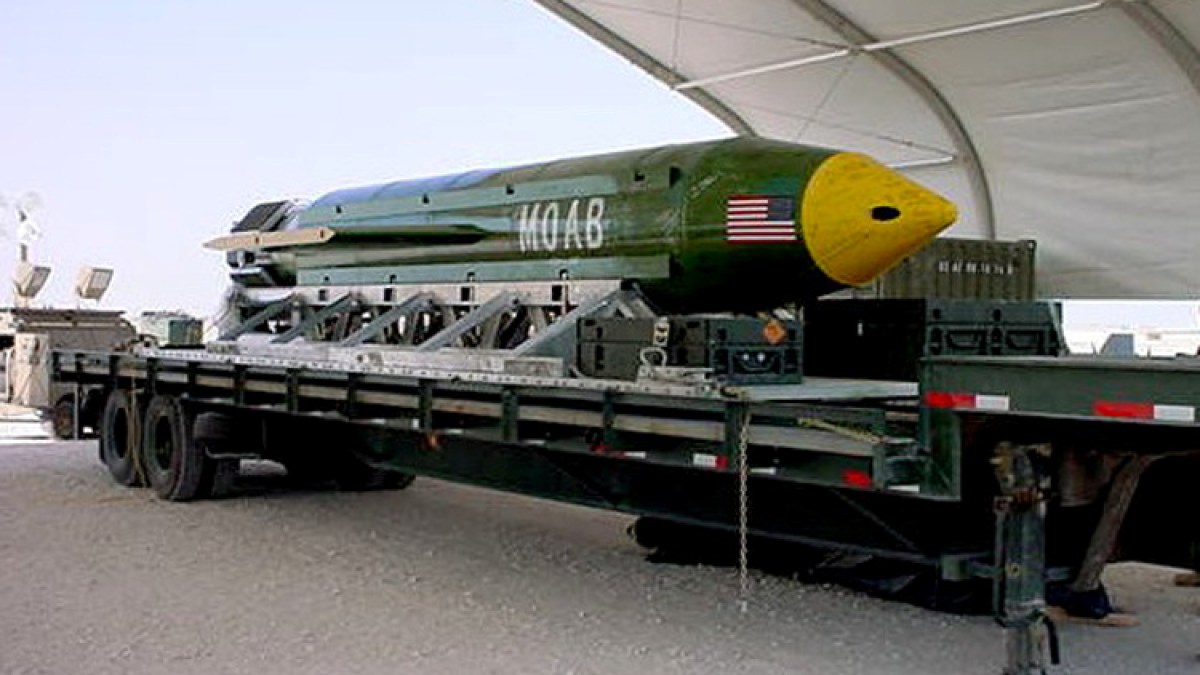
US media reports military considering plans to use GBU-43/B Massive Ordnance Air Blast Bomb (MOAB) Save Share The United States has developed plans to strike Iran with the largest non-nuclear bomb in its military arsenal on Iran’s energy infrastructure and nuclear sites if President Donald Trump orders renewed combat operations, according to US officials cited by CNN. Deploying the GBU-43/B Massive Ordnance Air Blast Bomb (MOAB), nicknamed the “mother of all bombs”, could significantly escalate the ongoing conflict at a time when fighting has lulled, experts say. Concerns are also being raised, including within the Trump administration itself, over what such a move would even achieve. Officials familiar with military planning discussions told US news outlet CNN and Al Jazeera that deploying the MOAB would be unlikely to help the US achieve its stated strategic goals, including to destroy Iran’s nuclear capabilities. Brussels-based military expert Elijah Magnier told Al Jazeera that using the MOAB would not even guarantee the destruction of Iran’s deeply buried underground nuclear installations and that such a strike would likely amount to little more than “political theatre”. Here’s what we know: The GBU-43/B Massive Ordnance Air Blast Bomb (MOAB) is a massive munition containing about 8,500kg (18,000 pounds or 8.5 tonnes) of high explosives. It weighs 9,800kg (21,605 pounds or nearly 10 tonnes) – about the same as four saloon cars – and is as long as a small yacht at just over 9 metres (about 30 feet). The MOAB is typically deployed from the Lockheed C-130 Hercules cargo aircraft because it cannot fit in a stealth bomber. The bomb, which was first manufactured between 2002 and 2003, has undergone 12 detonation tests. Its name is a reference to former Iraqi President Saddam Hussein’s comments during the 1991 Gulf War when he invoked the “mother of all battles”. The US has only deployed the MOAB once before – during its 2017 attacks on an Islamic State Khorasan Province (ISKP) cave and tunnel complex inAfghanistan. Afghan authorities claimed that while 94 Islamic State-Khorasan Province (ISKP) fighters were killed in the blast, no civilians were hurt. However, there were unconfirmed, local reports of civilian casualties and manyhomes were destroyed. Released from the aircraft. Cradle separates; GPS and fins guide it. H6 explosives detonate. A powerful shockwave spreads. Hot gases, smoke and debris rise in a mushroom cloud....