Iraq devalues dinar to ease cash crunch, leaving traders in limbo
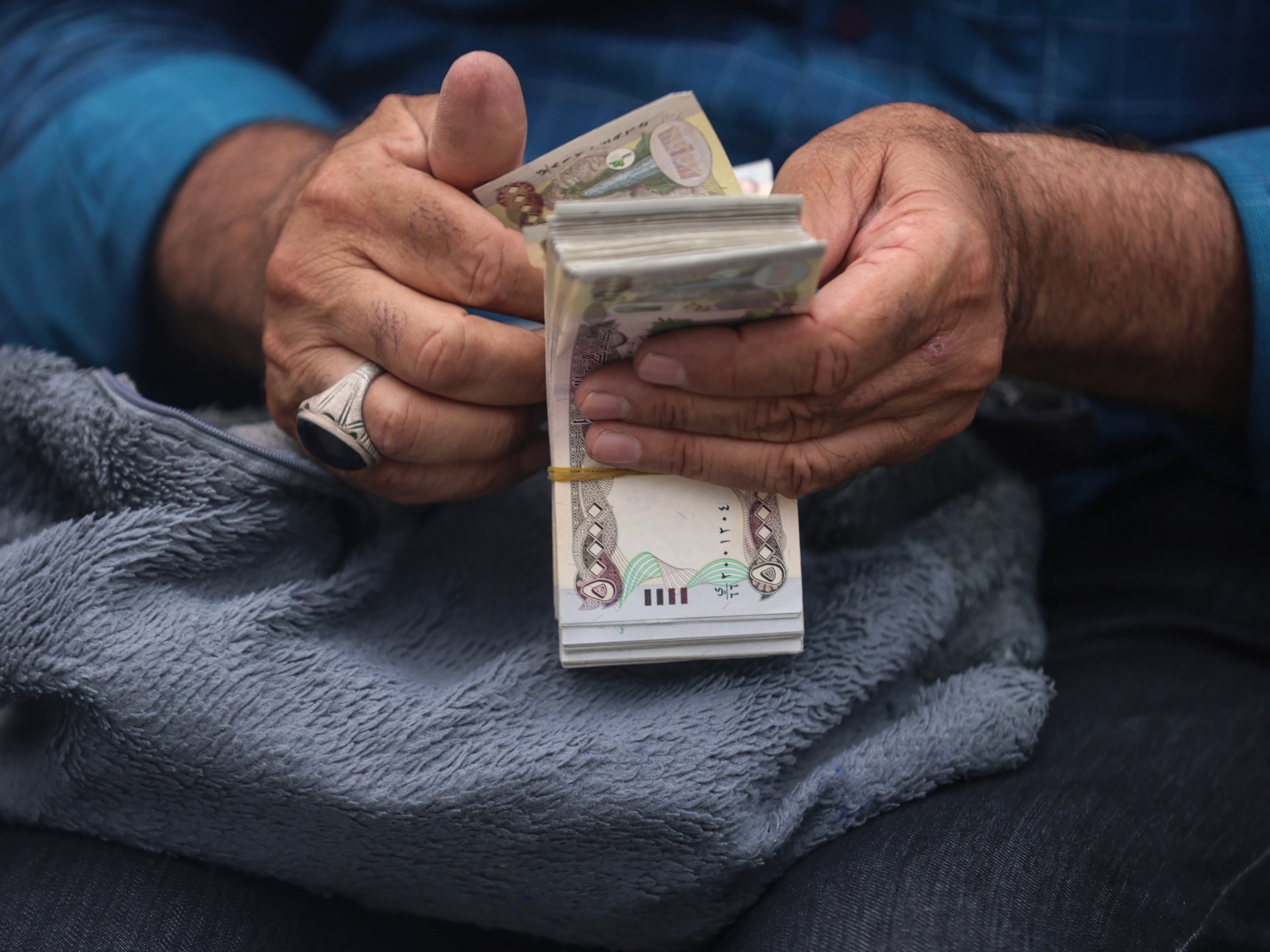
The government hopes a weaker dinar will help pay salaries, but traders face rising import costs and uncertainty. Save Share Baghdad, Iraq –Sitting anxiously in his small office in Jameela market, one of Baghdad’s main wholesale markets, food trader Hamza al-Rudayni is waiting to see what the coming days will bring. A decision by the Iraqi government to devalue the country’s currency, the dinar, against the US dollar has left traders like him facing sudden losses and uncertainty over the prices they should charge for their goods. “I don’t know what to do,” al-Rudayni told Al Jazeera after the devaluation reduced the dollar value of his dinar holdings, leaving him with less money to purchase imported goods. “All I know is I woke up a few days ago to discover that I had lost 25 million Iraqi dinars (roughly $16,500 at the new exchange rate) because of this decision, while larger merchants lost billions,” he said. Al-Rudayni entered the wholesale trade market last year after losing his previous job at a private Iraqi bank that he says was sanctioned by the United States Treasury. He sold his car and used his savings to start trading with a larger merchant before recently launching his own business. With exchange-rate fluctuations making prices unpredictable, al-Rudayni said he and many other traders have chosen to suspend buying and selling until the situation stabilises. “Market activity has ground to a halt,” al-Rudayni said. “Traders buy goods in dollars but sell them in dinars, as regulations prohibit them from selling in dollars.” That is the root of the problem for traders: A weaker dinar means they have to pay more in local currency for goods imported in dollars, while making it harder to determine the right price they should charge customers for goods they already have in stock. On October 7, the Iraqi governmentintroduced a new official exchange rateagainst the US dollar, in an attempt to ease a financial crisis triggered by the US-Israeli war on Iran and the disruption of oil exports through the Strait of Hormuz. Before the war,Iraq exportedaround 3.5 million barrels of oil per day through the Strait of Hormuz, accounting for 90 percent of Iraq’s government revenue. The Central Bank of Iraq decision set the rate at 1,520 dinars per US dollar for cash sales to the public. It was previously set at 1,320 dinars per dollar....