Mapping Africa’s energy wealth and 560 million who remain without power
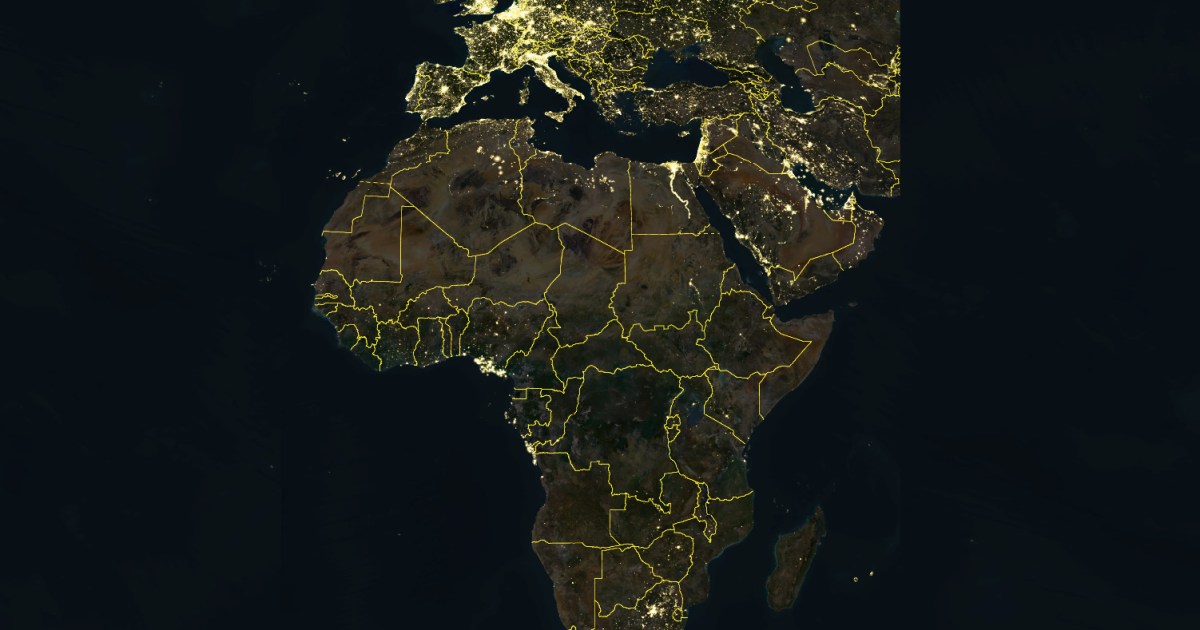
Africa is rich in energy, yet hundreds of millions Africans still live without electricity, most of the world’s total. Save Share Africa holds billions of barrels of oil, trillions of cubic metres of gas and produces most of the world’s cobalt and manganese for electric car batteries. This week, energy ministers, investors and oil executives are meeting in Cape Town for African Energy Week, which runs until October 16. The conference focuses on investment in oil and gas, energy finance and ending energy poverty. In this visual explainer, Al Jazeera maps where Africa’s oil, gas and critical minerals are found, how its electricity is generated and who still goes without it. Africa holds about 125 billion barrels of proven crude oil reserves, representing 7.2 percent of the global total. Proven reserves are oil that has been discovered and can be extracted commercially with existing technology, but is still in the ground. Libya and Nigeria account for nearly 70 percent of Africa’s reserves, with 48.4 billion and 36.9 billion barrels, respectively. Algeria ranks third, with 12.2 billion barrels. Angola follows with 7.78 billion barrels, while South Sudan and Egypt hold 3.75 billion and 3.3 billion barrels, respectively. Nigeria was Africa’s largest oil producer in 2024, accounting for about 23 percent of the continent’s output. Algeria and Angola followed with about 17 percent each, and together the three produced 56 percent of Africa’s oil. The top five producers accounted for more than 80 percent. Africa as a whole produced 7.6 percent of the world’s crude oil, roughly in line with its share of global reserves. Libya, which holds Africa’s largest proven reserves, ranked only fourth in production. Italy’s Eni, France’s TotalEnergies and Spain’s Repsol are among the foreign companies operating in the country, where political disputes and blockades have repeatedly disrupted output. Africa held almost 18 trillion cubic metres of proven natural gas reserves at the end of 2023. Nigeria and Algeria hold about 58 percent of the total, followed by Mozambique with 2.84 trillion cubic metres, Egypt with 2.21 trillion and Libya with 1.51 trillion. Algeria and Nigeria are also among Africa’s leading gas exporters, while much of Mozambique’s reserves, discovered offshore in the 2010s, remain largely undeveloped. The African continent supplies a large share of the minerals used in electric vehicles, batteries and renewable energy technologies....