When streets become a workplace: Gaza workers convert tents into offices
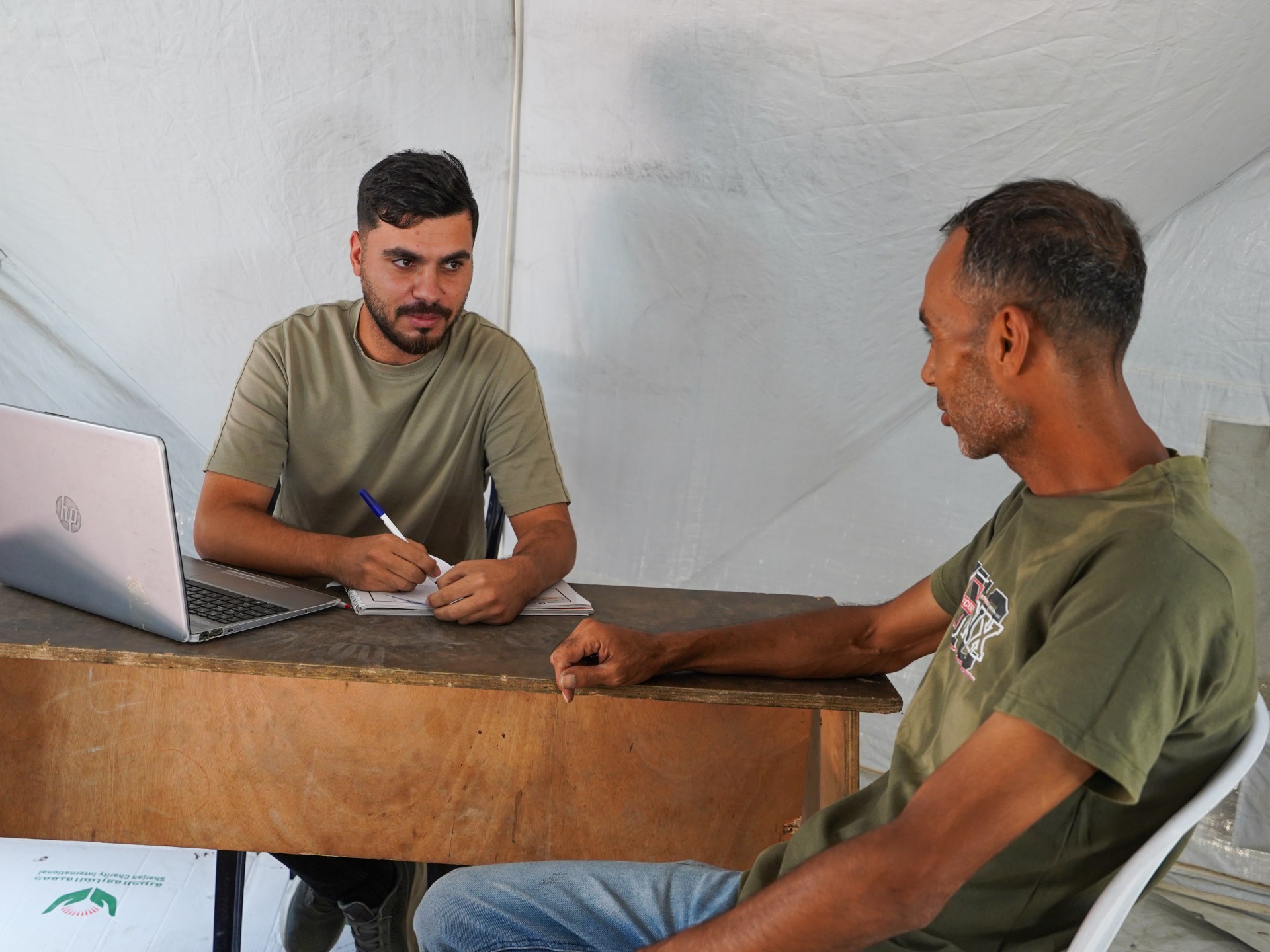
Gaza doctors, lawyers, and teachers have converted tents into offices to maintain a livelihood. Save Share Khan Younis, Gaza –Dr Mohammed al-Khalidi, a specialist in prosthetics and orthotics, sits in a modest tent in al-Mawasi, southern Gaza. It has been his place of work since his clinic on al-Bahr Street in Rafah was destroyed by Israeli bombing in April 2024. His second and third clinics in Khan Younis’s Old City, southern Gaza, were subsequently destroyed by Israel in May 2025. After this triple heartbreaking setback, al-Khalidi salvaged whatever medical equipment he could find and moved into his new office, a tent, where he has received patients for the past two years. This transitory space reflects a new reality in Gaza since Israel’s genocidal war on the enclave began in October 2023. Offices, clinics and shops have been wiped out in waves of Israeli air raids over the past three years, leaving professionals to conduct their work from tents or on the road. This phenomenon emerged in December 2023 following the displacement of Khan Younis residents to a narrow strip of coastal land between their hometown and Deir el-Balah. After a ceasefire, repeatedly broken by Israel, was announced for the enclave in October 2025, more of these tent offices, surgeries and shops emerged across Gaza as professionals sought to continue their practices. Working within these canvas confines presents multiple challenges for al-Khalidi. There is limited space, unreliable electricity, and the intense heat and loud noises to deal with. The setting bears little resemblance to his previous practice in a bricks-and-mortar office, but he still feels this arrangement is better than suspending services altogether. There is a massive need for prosthetics in Gaza, wherebetween 5,000 and 6,000 peoplehave undergone amputations between October 2023 and October 2025. “Working from a temporary space is nothing like working in a fully equipped clinic, but for me, it is better than stopping the service altogether,” al-Khalidi told Al Jazeera. “Patients who need prosthetic limbs or orthotic devices cannot always wait until conditions return to normal. Some have lost a limb during the war, while others need follow-up care or adjustments to devices they rely on in their daily lives....