High silver prices threaten Lucknow’s famed bridal nagra craft
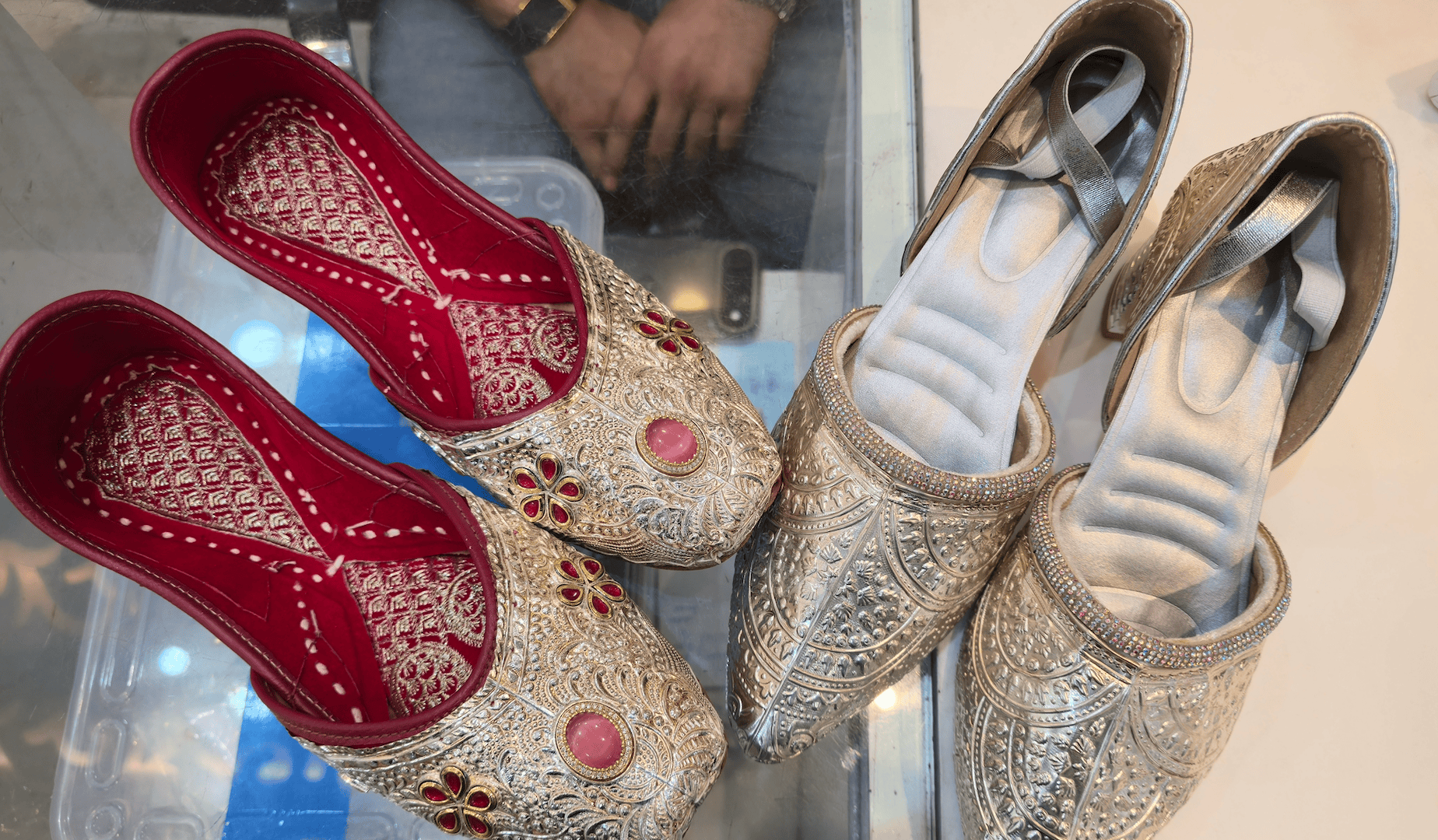
Lucknow brides can no longer afford traditional silver nagras Save Share In Lucknow, the capital of Uttar Pradesh and a city known for its Nawabi heritage and artisanship, 55-year-old Azhar Hussain sits at the bench where he has spent years making decorative footwear. His tools are still there, but the customers are not. Amid soaring silver prices over the past year, demand for his work has plummeted. The small workshop sits beside Chowk Bazaar, one of Old Lucknow’s oldest and busiest markets, a famed hub for wedding shopping full of silver jewellery and handcrafts. For three decades, Hussain has been one of the bazaar’s busiest craftsmen, making a distinctive form of silver slip-on shoes, known locally as nagras. He starts by cutting a thin silver sheet into the outline of a nagra, then sketches floral and leaf motifs onto the metal. Hussain then rests the sheet on heated lac, a soft natural resin that cushions the metal while he uses a hammer and engraving tool to tap intricate designs into place. Hussain then bends the silver around a foot-shaped furma, or mould, before fitting it over a base of cardboard, rubber and velvet, soldering the pieces together and polishing the pair. Craftsmen have used this process to make silver nagras since the 1600s. Originally, the decorative shoes were made for daily use by the Nawabi, Muslim rulers of the former kingdom of Awadh. “Silver nagras used to be the most important part of a nawab’s attire,” said 68-year-old Nawab Masud Abdullah, an eighth-generation descendant of Nawab Muhammad Ali Shah, the ninth Nawab of Awadh, who ruled from 1837 until he died in 1842. “They were not just footwear; they represented our culture and heritage,” he added. Once reserved exclusively for Nawabs, silver nagras have become a cherished wedding tradition over the last century, embraced by Lucknow’s middle and upper classes alike. “Our forefathers wore silver nagras every day. Later, they became reserved for celebrations and eventually only for special occasions,” Abdullah explained. “The good thing was that the tradition spread beyond the Nawabs. People, particularly brides across Lucknow, embrace it as their own and now a bride is considered incomplete without a nagra.” Hussain and his family of craftsmen have seen this transformation firsthand. “In the past, only Nawabs could afford these shoes because they symbolised wealth, power and status,” he said....