‘A Ceuta-style surge is possible’: Border tensions on NATO’s eastern flank
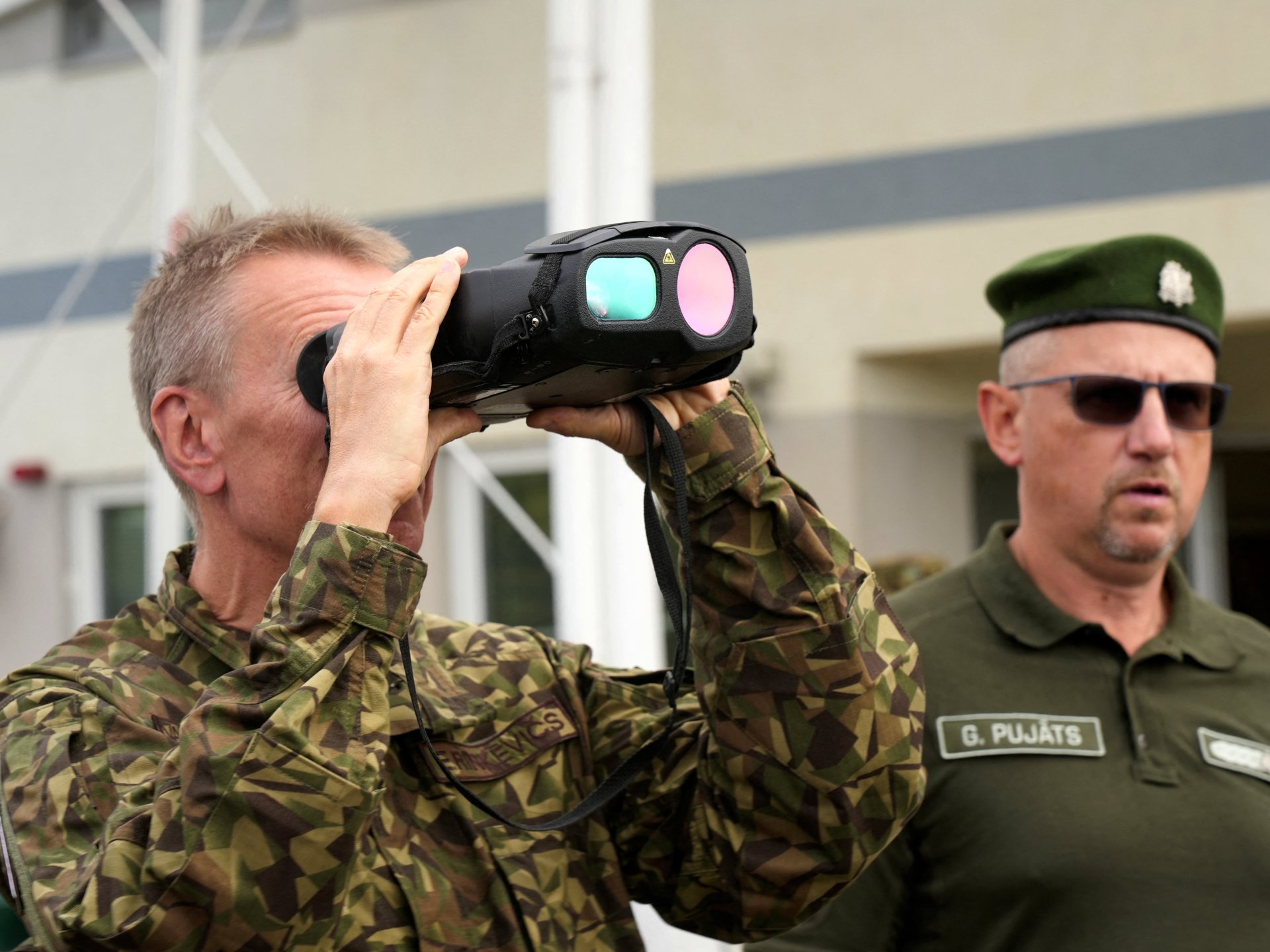
Belarus-linked incidents trouble Latvia and Lithuania, where experts warn of security challenges. Save Share Masked and armed men attempted to cross into Latvia from Belarus alongside 20 undocumented migrants on Monday. “The (masked) escorts of the illegal migrants, who were located on the Belarusian side, were armed, issued threats to … soldiers, and also actively urged and drove the migrant group toward Latvia,” Janis Dombrava, Latvia’s interior minister, said on Tuesday. The group was stopped by the military. Later, masked men managed to enter Latvia, destroying an electrical box and stealing surveillance cameras before returning to Belarus – an act of sabotage orchestrated by the country, according to Latvian officials. It was not clear if the second incident involved the same masked men as the first. “Unlike many previous incidents, this time the provocation was particularly demonstrative and aggressive,” said Dombrava. Since 2021, Belarus, Russia’s ally, has used migration as a tool to destabilise NATO’s eastern flank. It shares borders with Russia, Ukraine, Poland, Lithuania and Latvia – the latter considered Europe’s weakest link. “The crisis at the EU [European Union] border with Belarus has been ongoing for five years. The situation in Latvia has been deteriorating since May of this year,” Bartosz Chmielewski, Baltics expert from the Poland-based Centre for Eastern Studies told Al Jazeera. “There has been a steady rise in border violations and the number of people crossing.” In September and October, “the number of border violations has already reached 12,000, a level equal to the total for the entire previous year”, he said. According to Olevs Nikers, the Latvian president of the Baltic Security Foundation, “ACeuta-style surgeis physically possible, and we should plan for it.” He was referring to the recent crossing of tens of thousands of people from Morocco to Spain. “But sustained low-level pressure may be the more effective strategy. It creates exhaustion, budget pressure and friction between allies. Poland’s renewed controls on its border with Lithuania are already an example of this.” He noted that Lithuania’s border with Belarus is four times longer than Latvia’s 173km (107 miles), yet pressure has been concentrated in Latvia. “This looks less like spontaneous migration than a deliberate instrument, adjusted to test the neighbour perceived as most vulnerable,” Nikers said. Any migration pressure from Belarus may cause bureaucratic chaos.....