US Supreme Court hears challenge to air force UXO detonations in Guam
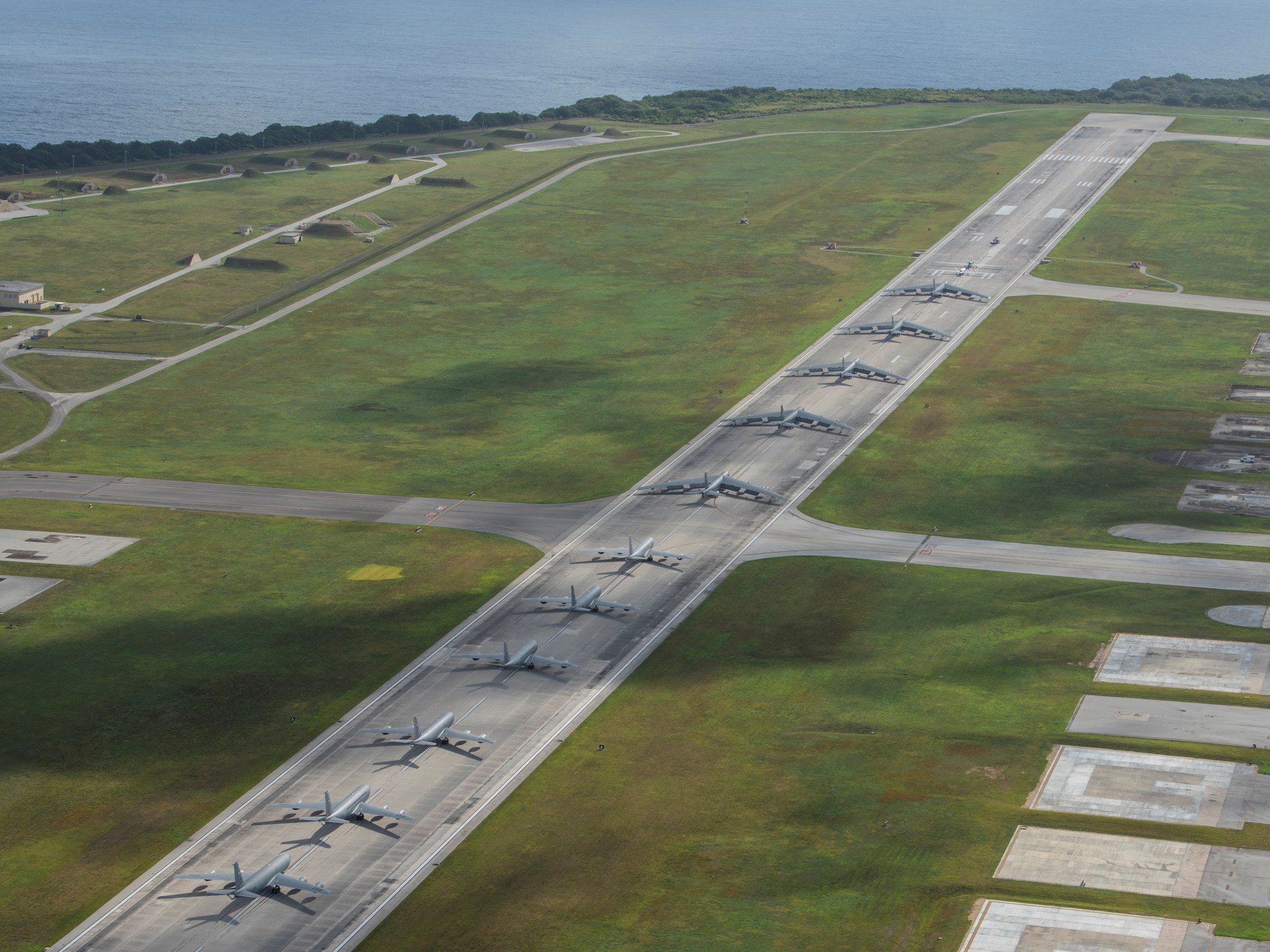
Advocacy group claims military sidestepped review of impact, says case highlights lack of representation in US territories. Save Share The United States Supreme Court has begun hearing arguments in a case that could determine whether the US air force can continue to use a beach in Guam to detonate unexploded ordnance. Wednesday’s hearing stems from a challenge by a Guam conservation group, Prutehi Guahan, which argues that the longstanding use of Tarague Beach to dispose of munitions may harm the ecosystem, damage an important cultural and historical site, and threaten the island’s water resources. The case has gained attention for raisingbroader questionsover the rights of residents of US territories, who cannot vote in presidential elections and have limited representation in the US legislature. Guam became a US territory in 1898, in the wake of the Spanish-American Civil War. It has also served as a key US military hub in the western Pacific, hosting both Andersen Air Force Base and US Naval Base Guam. The island has an estimated population of about 170,000. Here’s what to know about the case: The case before the Supreme Court hinges on whether the US air force followed proper environmental procedures before applying for a new permit to continue to dispose of and destroy hazardous munitions – including bombs, landmines and missiles – at Tarague Beach. The air force has used the beach for the detonations since 1982 and applied for a permit to continue in 2021. Guam’s Environmental Protection Agency did not “deny or approve” the permit, and detonations have continued. At the centre of Prutehi Guahan’s challenge is whether the air force followed the law. In applying for the permit, the air force adhered to the 1976 Resource Conservation and Recovery Act, which requires environmental regulators in US states and territories to regulate hazardous waste disposal. Prutehi Guahan has also maintained that the air force must adhere to the National Environmental Policy Act of 1969, which requires federal agencies to conduct environmental impact assessments, including receiving community input, before undertaking major decisions. In court filings, Prutehi Guahan, which means Protect Guam in the Chamorro language, said the air force disposal range is located “on ancestral land that the military seized from local families after World War II”....